Foreword
I started jotting down notes for this book back when I began dating the woman who would eventually become my wife.
Our love story is a special one, and maybe it deserves its own book someday. Since I didn’t have much dating experience under my belt, I figured it would be smart to put together a personal framework to help me avoid stepping on too many landmines. I hoped to dodge the big mistakes, but more often than not, I found myself drifting away from this guide and learning a few hard lessons the painful way.
There’s a line from Soren Kierkegaard that sounds so obvious that it hurts: “Life can only be understood backwards; but it must be lived forwards.” I think that captures the strange position any of us is in when we try to write about relationships. While you’re inside one, you can’t quite see the shape of what’s happening. Only later, when you look back, do the patterns reveal themselves. And this concept applies to love even more than it does to life in general. This book is my attempt to translate some of that backward-looking clarity into something you can actually use while you’re still moving forward.
Despite all my missteps, our story turned into a beautiful family, and I was lucky enough to “win” my wife’s heart. That said, I want to be upfront about something: this book isn’t a cure-all for relationship troubles, and it doesn’t claim to be the definitive guide to understanding or building a great relationship with a woman. It’s simply an honest but structured reflection on my own experiences and the lessons I’ve picked up along the way. My hope is that by sharing what I’ve learned, readers might sidestep a few arguments and find their own relationships a little smoother.
I should also confess upfront: I’m not a relationship expert. I’m not a therapist, a psychologist, or a couples counselor. I’m a guy who got lucky enough to find a remarkable woman and stubborn enough to want to figure out how to keep her happy. That’s the entire qualification behind this book. If you came looking for credentials, you can close it now. If you came looking for the kind of practical wisdom one regular guy might share with another over a beer, you’re in the right place.
While the layout of this book might look like a formal manual, it isn’t based on rigorous research or empirical studies. It’s a mix of personal stories and reflections. Think of it less like a textbook and more like a long conversation. The kind you’d have with an older friend who has made every mistake worth making and is willing to share what those mistakes taught him, even the embarrassing ones.
Tolstoy famously opened Anna Karenina with the line: “Happy families are all alike; every unhappy family is unhappy in its own way.” I’ve come to suspect the opposite is also true. Happy couples are happy in their own quietly unique ways, while unhappy couples often stumble over the same handful of recurring problems. The patterns in unhappiness, the avoidable arguments, the misread cues, the slow drift caused by inattention, are what I’ve tried to map in these pages. Not because mapping them guarantees happiness, but because spotting them early gives you a real fighting chance. It’s also worth quoting a billionaire friend of mine. He always says that a good deal is when everybody is reasonably unhappy. And I don’t want to be the pessimist here, even though opening a paragraph with Tolstoy might give that impression. Unhappiness isn’t exactly the opposite of happiness. There could be a huge amount of happiness when some reasonable unhappiness is embraced.
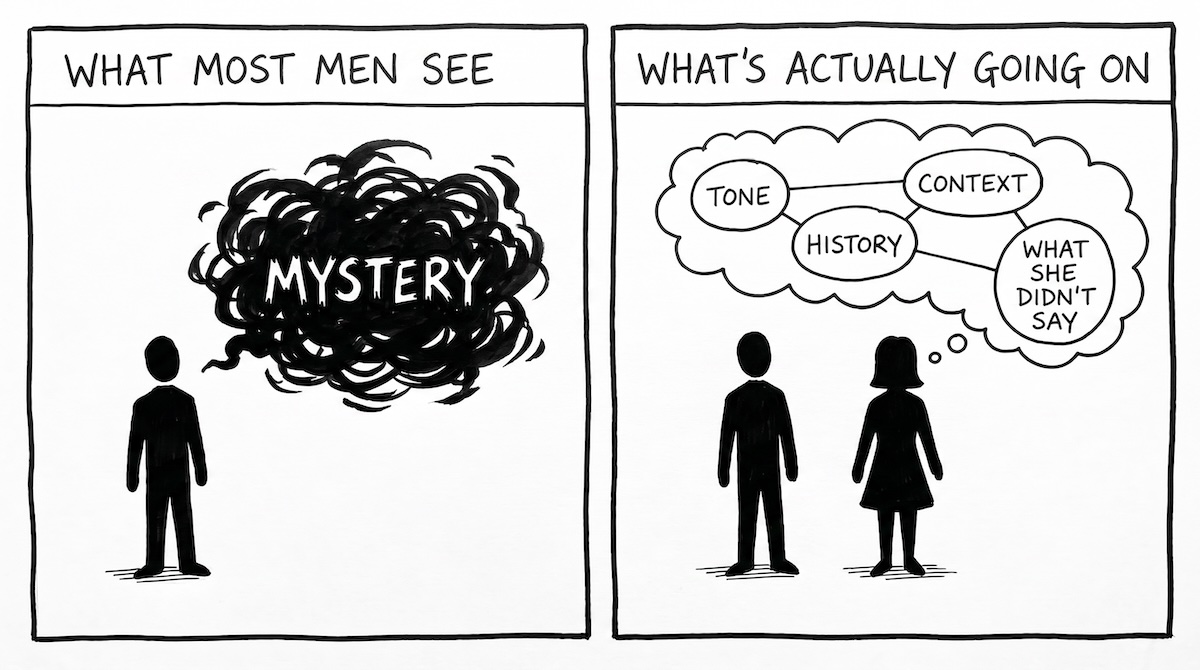
I also want to make clear that this book is meant as a feminist manifesto. It’s not a playbook for “winning her over on the first night” or any other kind of gender-based manipulation. The whole self-improvement-for-men genre is, frankly, crowded with bad advice. There’s a strain of so-called “pickup” or “alpha” thinking that treats women as puzzles to be solved or obstacles to be overcome. That’s not what this is. The premise here is the exact opposite: women are not puzzles. They are full, complex, intelligent people, and the work of a relationship is the work of two adults learning each other deeply and choosing each other repeatedly.
My wife, who served as the first editor and reader of this manuscript, encouraged me to take what started as casual musings and shape them into something more structured. She caught the moments where my framing leaned a little too far toward “man explains women” and pulled me back. Anything in these pages that lands with humor or warmth probably has her fingerprints on it. Anything that falls flat is on me.
So that’s what this book is, ultimately. A record of someone’s attempt. Mine, specifically, but I hope yours becomes layered on top of it as you read.
I trust readers will approach this work with the same humor and lightheartedness in which it was written. Take what serves you. Leave the rest. And if you find that one chapter changes how you handle a single conversation with the person you love, then this whole project will have been worth the effort.
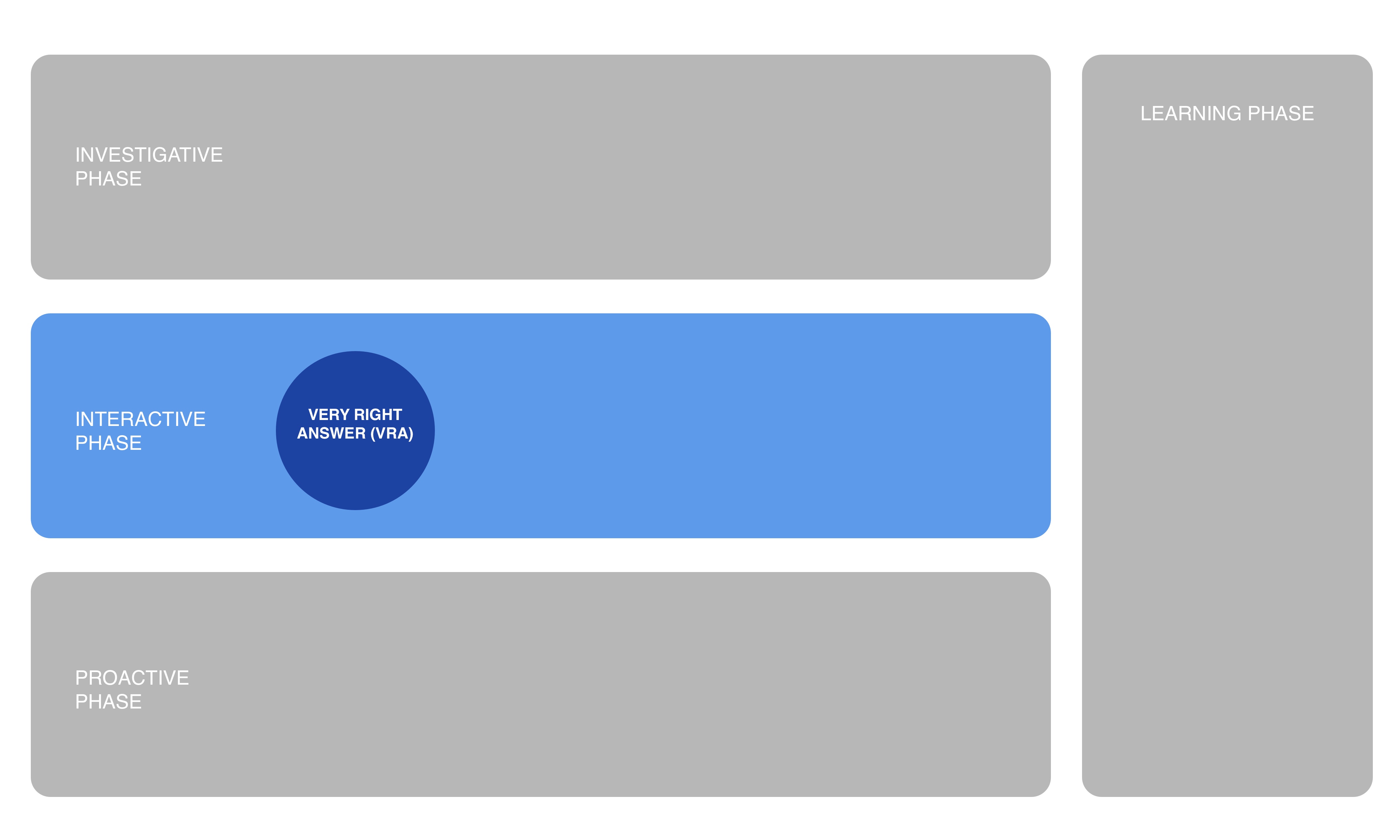
A few practical notes before we begin. The book is structured in three main phases, which I call the investigative, interactive, and proactive phases, plus a continuous thread called the learning phase that runs through all of them. Don’t worry if that doesn’t make sense yet. By the end of the third or fourth chapter, the framework will start clicking into place. Each chapter builds on the one before it, so I’d recommend reading them in order on your first pass. After that, treat the book like a reference. Flip back to specific chapters when a particular situation comes up.
One last thing. Throughout these pages, I use “she” and “her” and frame the partner as a woman, because that’s my own experience and I want to write honestly from where I stand. But most of the underlying principles, the attention, the listening, the proactive care, are universal to any committed relationship. If you’re reading this from a different vantage point, take whatever translates and ignore the rest.
Ok, very last thing. The book was originally written in 2022, but it went through a bit of rewriting and this is the new version, hopefully more enjoyable. AI helped my broken English, but the content is genuinely coming from my keyboard.
Enough with last things, welcome aboard, let’s get started.